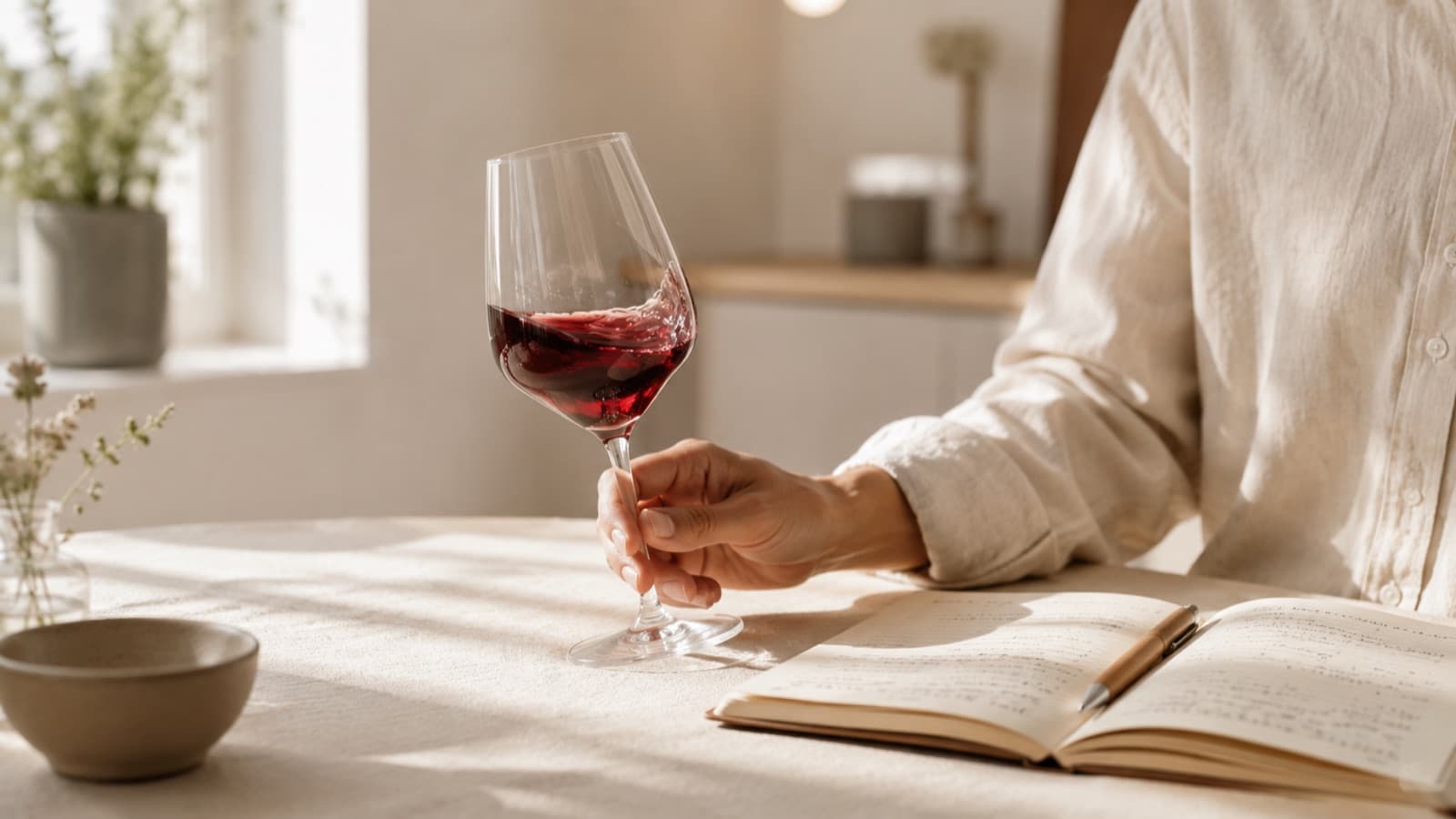
A systematic tasting helps you remember wines and compare them fairly. You need no equipment — just a glass, light and a little attention. The method has four steps.
1. Appearance
Tilt the glass against a pale background. Judge colour and depth. Young reds often show a blue-purple hue, older ones a brick-red rim. Whites darken with age towards gold and amber.
2. Nose
Swirl the glass to release aromas and smell. Try to name fruit, flowers, spice, oak and any earthy notes. The nose often reveals more than the palate.
3. Palate
Take a sip and let the wine coat your whole mouth. Sense sweetness, acidity, tannin (grip), body and alcohol. How long does the finish last? A long finish is often a mark of quality.
4. Overall
Weigh the impressions together. Is the wine balanced? Does it suit food? Give it a verdict you can recognise next time.
Tip
Log the wine right after tasting while the impression is fresh. Over time your notes build a personal taste profile.