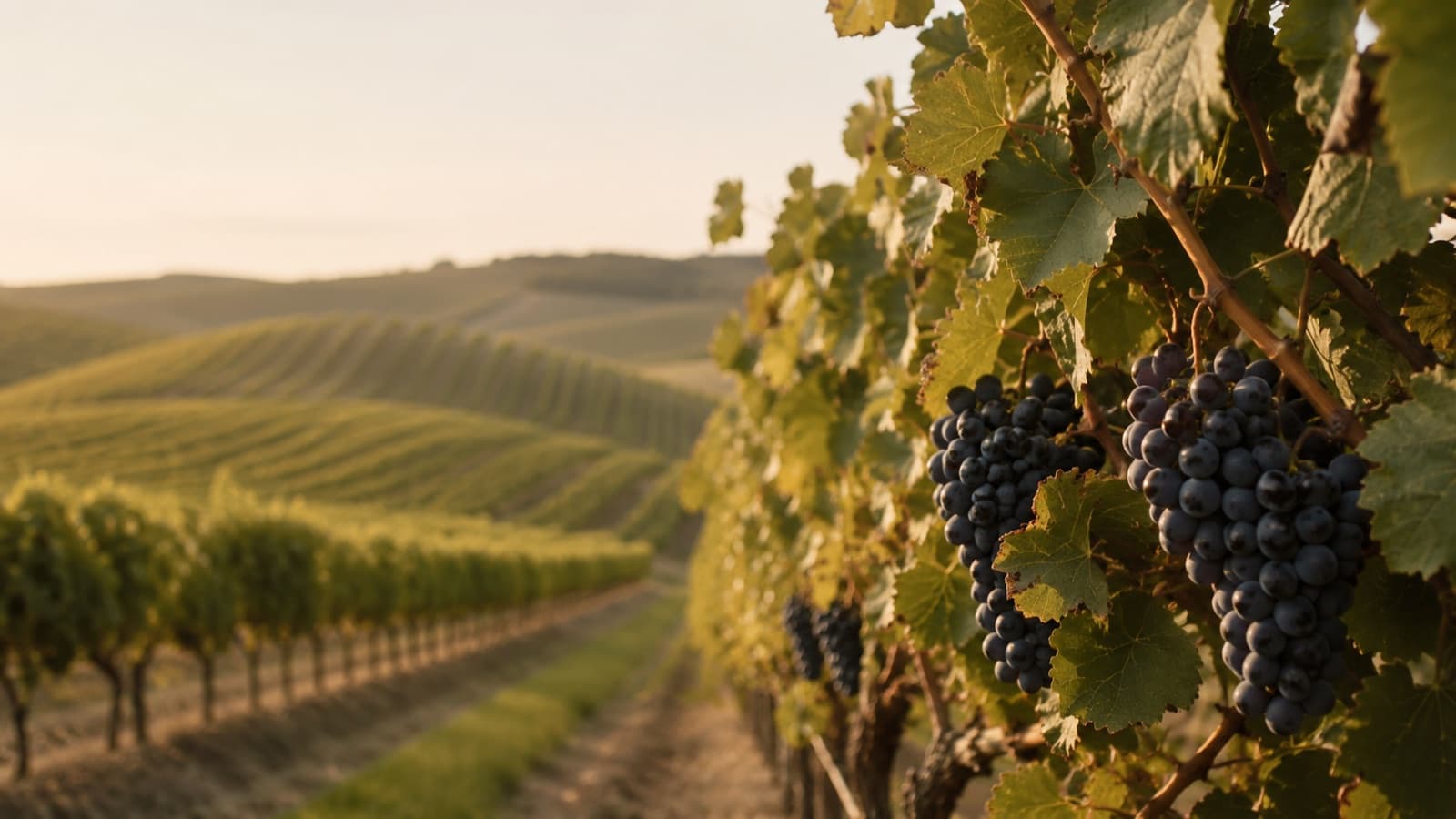
Chardonnay is the most adaptable white grape and a mirror of both place and winemaker's choices. Few grapes show so clearly what terroir and winemaking do to a wine.
How it tastes
In a cool climate like Chablis, Chardonnay gives green apple, citrus, high acidity and a mineral note. In warmer sites the fruit ripens towards yellow stone fruit, melon and tropical notes like pineapple.
The role of oak
Chardonnay takes oak better than most white grapes. Barrel ageing and fermentation on the lees give butter, vanilla, bread and a rounder, fuller texture. Unoaked Chardonnay is fresh and fruit-driven instead.
Where it grows
Burgundy is its home — from steely Chablis in the north to full, oaked wines in the Côte de Beaune. Chardonnay is also a base grape in Champagne and grows well in California, Australia and Chile.
With food
Light and unoaked suits shellfish and fish. Full and oaked matches pan-fried fish, chicken and creamy dishes.